Power your power tools right.
Follow these important tips for battery safety,
selection, use, & disposal.

Selection
Choose batteries from the original power tool manufacturer, engineered to work optimally with corresponding power tools.

Transport, Use & Storage
Always transport and store your Li-ion battery away from metals such as keys, coins, screws and nails, as well as liquids.
Disposal
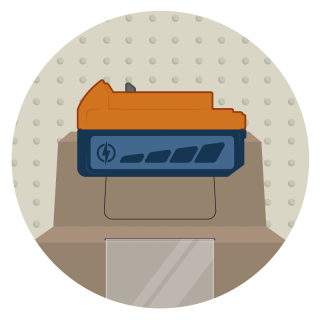
If your battery reaches the end of its life, don’t throw it away. Take it to a recycling center, or place it in a receptacle designed for recycling batteries.
Selection
Choose Original
Original manufacturer components share the same circuitry to best operate with matching power tools. Accept no substitute.
Choose Smart
Original manufacturer batteries contain smart technology to monitor and maintain peak battery health.
Choose Authentic
Aftermarket and counterfeit batteries may not include all the safety design features or undergo proper testing and quality controls.
Transport, Use & Storage
Protect it
Always transport your battery away from contact with metal objects or liquids, which present a safety hazard.
Store it
Always store your battery as instructed in the owner's manual and follow manufacturer guidelines for safe storage and operating temperatures.
Check it
Stop use if it begins to overheat or is damaged, dropped, or modified.
Disposal
Don't Trash It
If your battery is damaged, contact the manufacturer. If it has reached the end of its life:
- Never throw it in a waste or recycling bin
- Take it to a local recycling center
- Always follow regulations when disposing your battery
The Power Tool Institute(opens in a new tab)
Page likes: 29
We are the leading organization for power tool safety resources, information and education.
Proper transportation is an important part of battery safety! 
View Comments
Like reaction
Reactions: 1
Shares:
0
Comments:
0
Have questions about using your new power tool safely? Start by reviewing the instruction manual that came with your specific tool.
View Comments
Like reaction
Reactions: 2
Shares:
0
Comments:
0
Choose smart. Choose batteries designed to work with your power tools. 
View Comments
Like reaction
Reactions: 2
Shares:
0
Comments:
0
|